
Ghana Water Limited (GWL) has engaged residents of Agbogbloshie in the Accra Central District as part of efforts to improve communication with customers, address concerns about water supply and promote the responsible use of potable water.
The community engagement, held at the Church of Pentecost, allowed residents to interact directly with GWL officials, raise concerns about water services and seek clarification on challenges affecting their access to potable water.
The engagement was attended by the Accra East Region’s Regional Public Relations Manager, Nana Yaw Barima Barnie, his assistant, Winifred Esinam Agbolosoo, Accra Central District Manager Ing. Ebenezer Kokoroko, and other officials from the district.
Ghana Water urges Agbogbloshie residents to pay water bills
Addressing residents, Nana Yaw Barima Barnie emphasised the importance of water to human life and urged customers to recognise potable water as a valuable service that must be paid for.
He encouraged residents to settle their Ghana Water bills promptly and in full, while warning against illegal connections.
According to him, customers found engaging in illegal connections could face sanctions under the law.
GWL targets illegal connections and ‘spaghetti lines’
Nana Barnie also explained that GWL is undertaking an exercise to remove what it described as “spaghetti lines” — multiple water pipelines running through gutters and other unhygienic locations.
He assured customers who had been disconnected because of unpaid bills that they could be reconnected after providing proof that their outstanding bills had been fully settled.
Residents, however, raised several concerns about the disconnection exercise and their water supply.
Some said they had been legally connected by GWL but questioned why accumulated bills had been allowed to become significantly high before disconnections were carried out.
Others complained about inadequate water supply caused by low pressure in parts of the community.
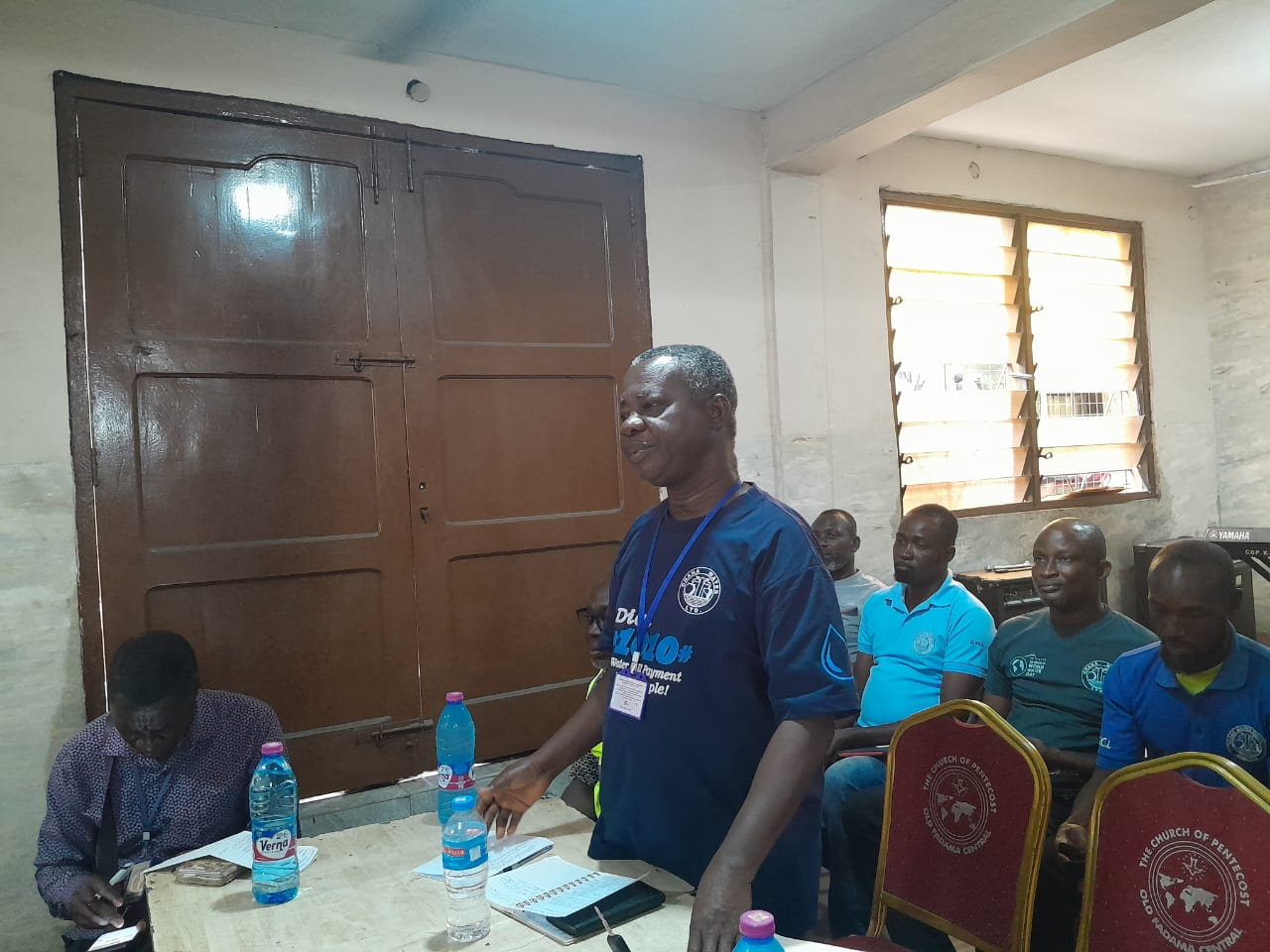
Nana Yaw Berima Banie, Regional Public Relations Communications Officer, Accra East Region of Ghana Water Limited
Residents raise concerns over commercial water facilities
The engagement also focused on challenges involving commercial water facilities commonly known as showers.
Residents explained that some of these facilities are owned by people who do not live in Agbogbloshie and are subsequently handed over to other individuals to manage.
According to residents, this arrangement can create difficulties because the managers may not know about accumulated bills when billing information is sent directly to the registered owners.
GWL officials assured residents that steps would be taken to improve communication with both owners and managers of such facilities.
The Company said billing information would be communicated through the registered contact numbers of the relevant individuals to help ensure that bills are received and paid on time.
Ghana Water promotes electronic billing and payments
The community engagement also provided an opportunity for GWL officials to educate residents about the Company’s transition to electronic billing and payment systems.
The new system is intended to make it easier for customers to access their bills and make payments electronically.
Accurate billing was another major issue raised during the discussion.
Some residents currently receive estimated bills because they do not have water meters. While some expressed concerns that installing meters could result in higher bills, GWL officials explained that metering provides a more accurate way of determining actual water consumption.
According to the officials, accurate metering can also improve accountability between the Company and its customers.
Residents are encouraged to reduce water wastage.
GWL encouraged residents to use potable water responsibly and avoid unnecessary wastage during activities such as bathing, washing and other household chores.
Officials reminded residents that even small amounts of wasted water can add up to significant volumes when multiplied across a large population, resulting in additional costs.
GWL warns against inline booster pumps
Water pressure was another concern raised by members of the Agbogbloshie community, including the use of inline booster pumps.
GWL officials informed residents that using such pumps to increase water pressure is not permitted and that customers who engage in the practice could face sanctions.
Officials further explained that widespread use of inline booster pumps could affect pressure across the wider water network and consequently reduce the supply available to other customers.
Residents were also encouraged to report suspected cases of water theft and illegal connections to the appropriate GWL offices.
The Company urged customers to report staff members suspected of facilitating illegal connections or reconnections so that investigations and appropriate disciplinary action can be undertaken.
Agbogbloshie residents call for regular bill payments
Some residents suggested that customers should be encouraged to pay their Ghana Water bills regularly instead of allowing arrears to accumulate over long periods.
The suggestion formed part of broader discussions on how both customers and GWL could improve the management of water services in the community.
Accra Central District Manager Mr Ebenezer Kokoroko stressed the importance of maintaining regular communication between GWL and the communities it serves.
He said the Company was working to strengthen community-level engagement by having representatives who could communicate GWL activities, receive concerns from residents and help address issues within communities.
Ghana Water seeks stronger community collaboration.
The engagement provided an opportunity for GWL and the Agbogbloshie community to openly discuss challenges affecting water service delivery and identify areas requiring continued cooperation.
The Company said the initiative forms part of its wider efforts to strengthen its relationship with customers, understand community concerns and improve the delivery of water services.
GWL is expected to continue engaging communities as it seeks to improve communication, promote responsible water use and address challenges affecting customers across its service areas.