

By Eugene Davis
The government has begun engaging investors on the Ghana Cocoa Board’s (COCOBOD) Cocoa Notes Programme, signalling a significant shift towards the domestic capital market to raise funding for cocoa purchases and other operations across the sector.
Finance Minister Dr Cassiel Ato Forson and COCOBOD Chief Executive Officer Dr Randy Abbey took turns at the investor engagement to outline the structure of the Cocoa Notes Programme and its role in supporting financing requirements within the cocoa value chain.
According to a post by the Ghana Cocoa Board on its X account, the engagement was aimed at providing investors with an overview of the Cocoa Notes Programme and its role in financing cocoa purchases and related operations. forms part of efforts to deepen the participation of domestic investors in financing one of Ghana’s most important export sectors, while reducing the cocoa regulator’s reliance on external borrowing.
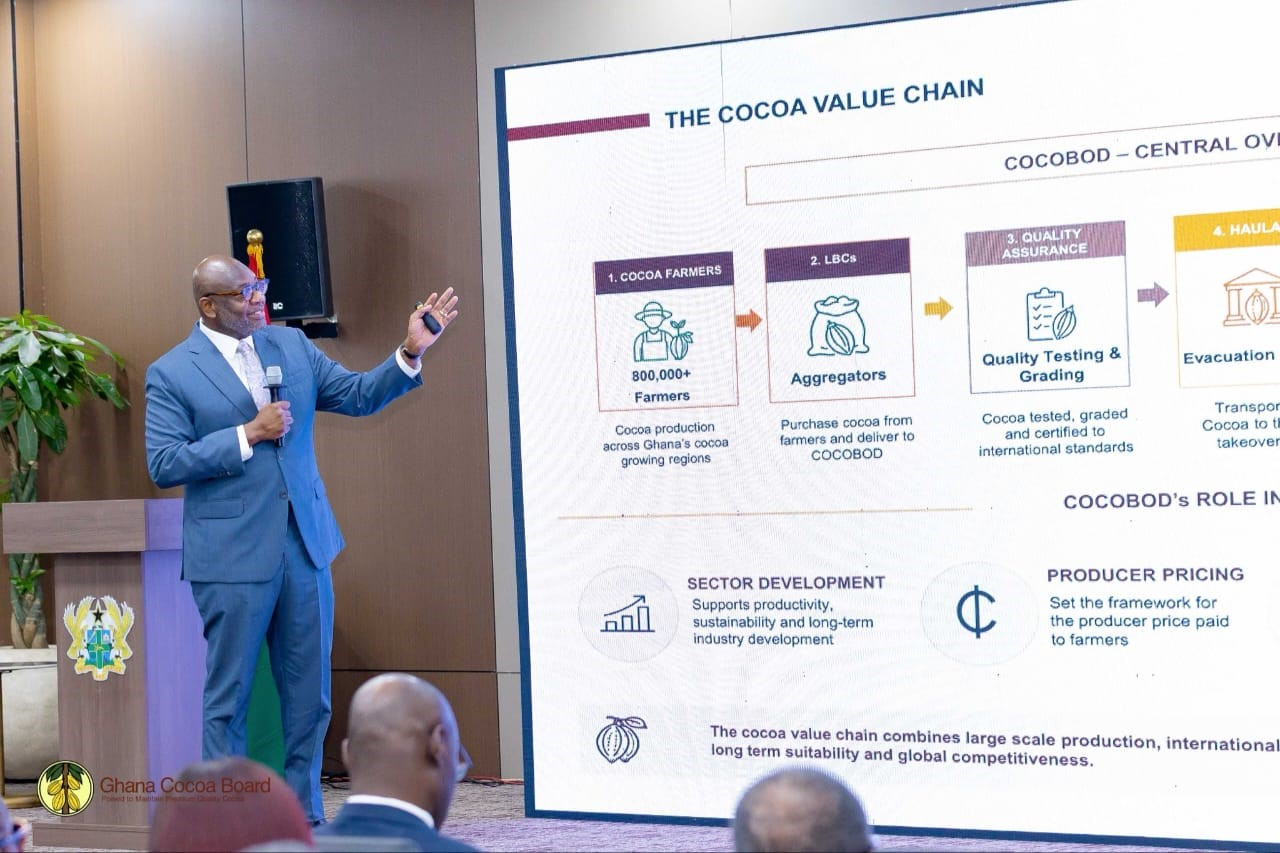
Dr Abbey used the engagement to take investors through the cocoa value chain, highlighting the various activities and institutions involved in getting cocoa from farms to export markets.
These include cocoa farmers, licensed buying companies, quality assurance, haulage, sector development and production, as well as COCOBOD’s role in coordinating and supporting the industry.
The presentation underscored the financing requirements embedded across the value chain, particularly the need to mobilise funds at the beginning of the crop cycle to purchase cocoa from farmers.
A new financing channel
The Cocoa Notes Programme represents a move towards creating a domestic financing channel for COCOBOD at a time when the government is seeking to deepen the local capital market and reduce exposure to foreign-currency borrowing.
For investors, the programme potentially provides an additional avenue to gain exposure to an asset linked to Ghana’s cocoa sector, while giving COCOBOD access to domestic liquidity.
The shift could also have wider implications for the financial system. A greater reliance on cedi-denominated domestic funding could reduce some of the foreign-exchange risks associated with external cocoa financing, although the cost of domestic borrowing and the programme’s repayment structure will be important determinants of its overall benefit.
For COCOBOD, access to a broader pool of domestic investors could provide greater flexibility in financing cocoa purchases, particularly as the sector faces significant working-capital requirements at the start of each cocoa season.
However, the success of the programme will depend on investor confidence in COCOBOD’s financial position, the pricing of the notes and the clarity of the repayment arrangements. It will also depend on whether domestic capital can be mobilised at a competitive cost relative to other sources of financing.
Implications for cocoa sector
The development comes against a backdrop of efforts to strengthen the financial sustainability of Ghana’s cocoa industry, which has faced rising financing pressures and volatility in international cocoa markets.
A more developed domestic funding model could, over time, create a closer link between Ghanaian savings and investment and the financing needs of the cocoa economy.
It could also encourage institutional investors, including pension funds and asset managers, to play a larger role in financing strategic sectors of the economy.
The investor engagement therefore marks more than a fundraising exercise. It points to a broader attempt to restructure how Ghana finances cocoa purchases, while positioning the domestic capital market as a more important source of long-term funding for the sector.