
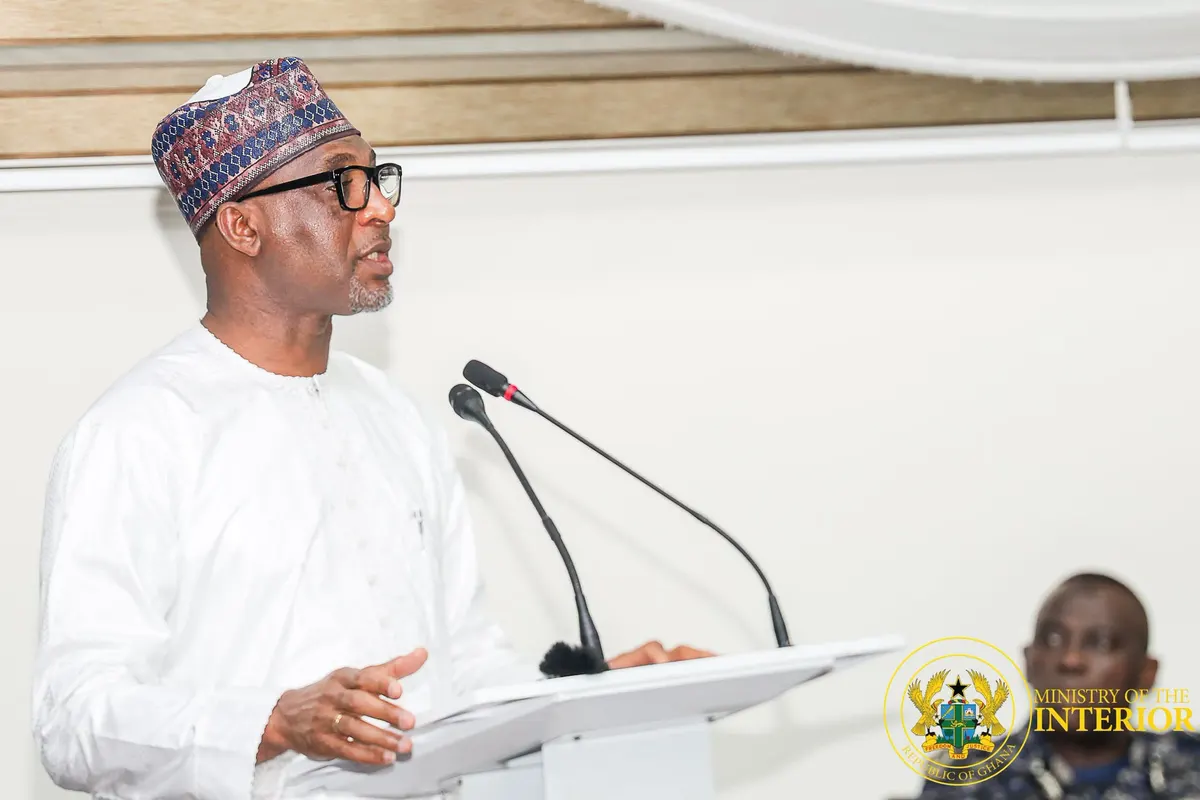

Security services recruitment initiatives in Ghana have hit a major landmark as 10,000 successful applicants officially begin active training across state protection agencies. The Ministry for the Interior confirmed the update during a public briefing, detailing structured intake numbers across national security branches.
10,000 Successful Recruits Begin Security Services Recruitment Ghana Training
Speaking during his session at the Government Accountability Series in Accra on Monday, August 24, 2026, Minister for the Interior Muntaka Mohammed-Mubarak shared encouraging news regarding public sector employment and national protection forces. The current intake class represents the first massive wave under the current recruitment cycle.
“The first 10,000 successful applicants to the Police, Fire, Prisons, and Immigration Services are currently in training,” Minister Mubarak stated. “Another 10,000 are set for training next year to be drawn from the current pool of successful applicants.”
This two-tier deployment ensures that military and law enforcement academies maintain balanced capacity while continuously strengthening personnel count across the Ghana Police Service, Ghana National Fire Service, Ghana Prisons Service, and Ghana Immigration Service (GIS).
Transparent Health Screening in Security Services Recruitment Ghana Operations
The ongoing security services recruitment drive in Ghana follows detailed disclosures regarding mandatory physical and medical evaluations. Appearing before Parliament’s Assurances Committee on Monday, July 6, 2026, the Interior Minister revealed that comprehensive health screenings flagged roughly 1,300 applicants as testing positive for the Human Immunodeficiency Virus (HIV).
To protect applicant privacy and emotional welfare, officials avoided sending direct rejection notices containing sensitive diagnoses. Instead, the ministry implemented a supportive desk system where candidates could voluntarily request private consultation and guidance.
“In the recent recruitment, we have about 1,300 or so who were on HIV, and they said, can you imagine sending somebody the results that you have HIV? I mean, that’s not the procedure. The person has to go through some orientation,” Mubarak explained. “One of the things we did was that when you get disqualified, you are given a contact to reach out to. If you are interested in knowing the details, then when you call, they assist you and let you know.”
Rehabilitation Protocols and Future Security Services Recruitment Ghana Eligibility
The ministry emphasised that health disqualifications during initial screenings do not mean permanent exclusion from public service. Medical teams identified several treatable conditions during testing, prompting officials to encourage applicants to seek medical care so they can qualify for future enlistment exercises.
“Interestingly, some of the things that we realize are treatable, so people need to know and then also get treatment so that in subsequent recruitments they could join,” Mubarak added.
Through continuous health monitoring, structured candidate intake, and increased facility investments, the ministry aims to build a robust defence apparatus capable of handling emerging regional security threats.