

Ghana Immigration Service Executes Major Crackdown on Irregular Migration
The Ministry for the Interior has reaffirmed its commitment to curbing human trafficking, street begging, and transnational organised crime across the nation. Following extensive law enforcement operations, official reports show that Ghana immigration deportations and enforcement exercises have successfully targeted thousands of unauthorised foreign nationals operating within major urban centres since 2025.
Over 3,000 Irregular Migrants Removed Since 2025
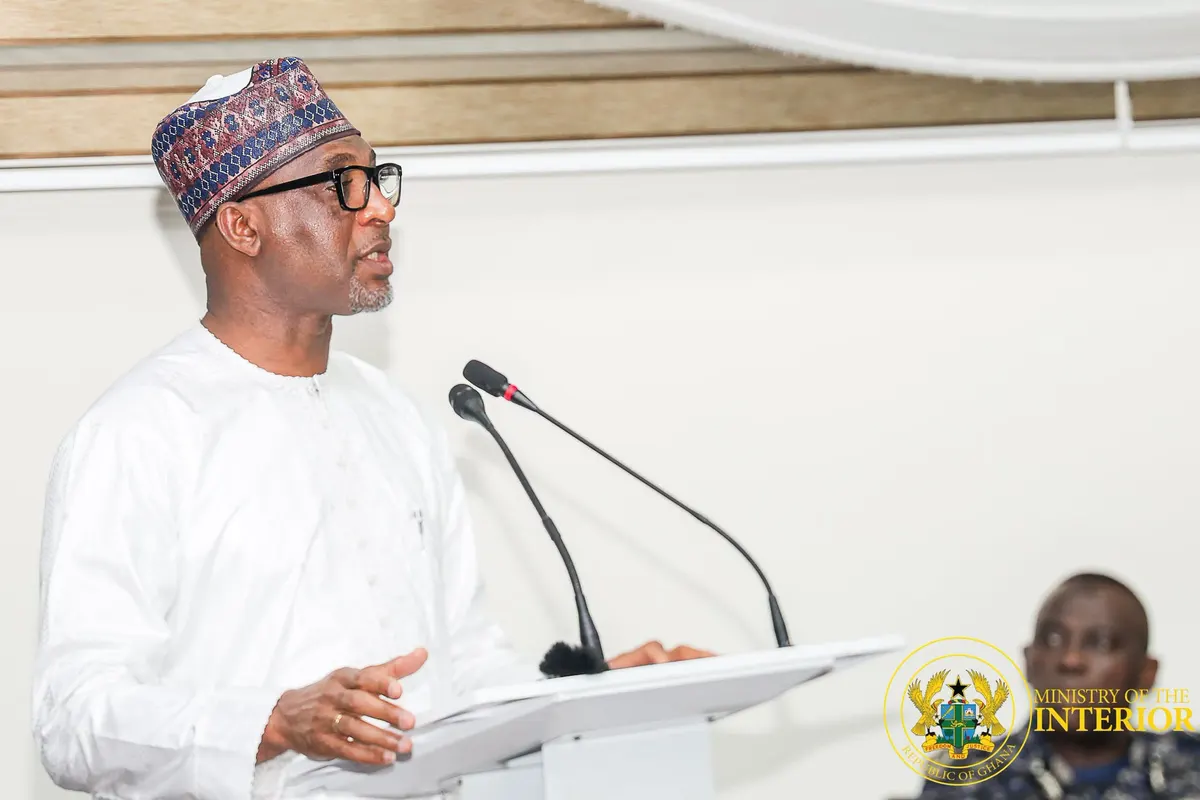
Addressing journalists during the Government Accountability Series on Monday, August 24, 2026, Minister for the Interior Muntaka Mubarak Mohammed disclosed key figures regarding national security operations. By the end of 2025, the Ghana Immigration Service (GIS) had successfully removed 2,281 migrant beggars along with 774 illegal immigrants implicated in organized criminal networks.
Enforcement efforts have maintained a steady momentum throughout 2026. Between January and July 2026 alone, immigration personnel removed an additional 960 migrant beggars from public spaces in Accra and Kumasi, alongside 186 foreign nationals linked to unlawful activities.
ECOWAS Protocols and Human Rights Standards
Despite the high volume of Ghana immigration deportations, the Interior Minister stressed that all operational activities are conducted in strict compliance with human rights frameworks and international legal commitments.
“We are pursuing this removal fully conscious of Ghana’s obligation under the ECOWAS Protocol on free movement of persons as well as the diplomatic relations and long-standing ties we have with other countries,” Mubarak stated. “Our objective is to reduce irregular migration and unlawful activities associated with it to the barest minimum, while ensuring that enforcement actions are lawful and carried out in a manner that is respectful of human dignity.”
Upgrading Border Security Infrastructure
When questioned on the persistent influx of irregular migrants, Minister Mubarak clarified that the primary challenge facing security agencies stems from operational constraints rather than a lack of political will.
To address these hurdles, the government has established a high-level consensus to provide specialised logistical support to border control authorities. This targeted funding aims to expand removal operations, improve intelligence collection, and secure Ghana’s territorial borders against unauthorised crossings.
This report from the Government Accountability Series provides context on how Ghanaian sector ministers present mid-year operational updates to the public..
Strengthening National Security and Border Management
The recent operational update from the Ministry for the Interior highlights a broader strategy by Ghanaian law enforcement to address security vulnerabilities across key urban centres and border points. Beyond metropolitan areas like Accra and Kumasi, regional immigration offices have increased surveillance along major transit routes to identify illegal entry networks and prevent unauthorized re-entry.
Officials emphasise that addressing irregular migration requires balancing firm border enforcement with international diplomatic commitments. Through diplomatic engagements and inter-agency coordination with neighbouring West African states, the government aims to establish sustainable repatriation protocols that respect human rights while maintaining national stability.