


By Eugene Davis
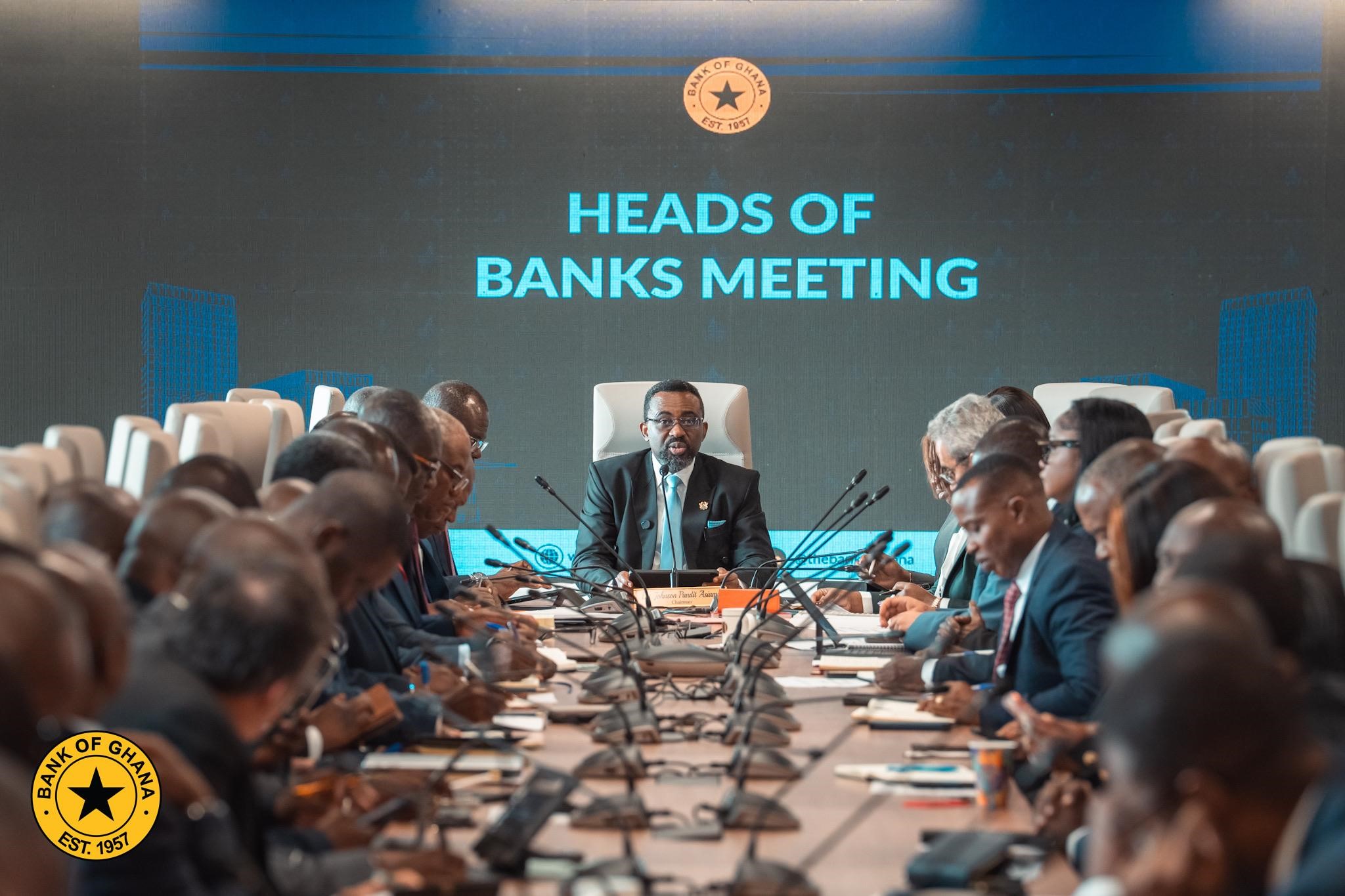
Banks should use Ghana’s improving macroeconomic conditions, lower interest rates and advances in financial technology to develop products that better serve households and businesses, Bank of Ghana Governor Dr Johnson Pandit Asiama has said.
Addressing heads of banks at the post-130th Monetary Policy Committee (MPC) engagement, Dr Asiama urged lenders to move beyond their traditional role as providers of credit and become strategic partners in driving business growth, entrepreneurship and export development.
“I therefore urge banks to leverage the gains from macroeconomic stability, declining interest rates, and advances in financial technology to develop innovative products that meet the evolving needs of households and businesses,” he said.
“Banks must go beyond financing and increasingly position themselves as strategic partners to businesses.”
The Governor said banks had a critical role to play in supporting the productive sectors of the economy through business advisory services, entrepreneurship support, market access initiatives and export-focused programmes that help firms identify opportunities in international markets.
His call comes as the central bank points to strengthening economic fundamentals, easing inflationary pressures and improving banking sector performance, creating what it sees as a favourable environment for increased private sector investment and credit growth.
Dr Asiama said the MPC had maintained the policy rate at 14 per cent to preserve macroeconomic stability while supporting the ongoing recovery in economic activity. He noted that although inflation had edged up marginally in recent months, underlying price pressures remained subdued.
The Bank of Ghana has also replaced the dynamic Cash Reserve Ratio framework with a uniform reserve requirement of 20 per cent to be held entirely in domestic currency, a move aimed at improving liquidity management, strengthening monetary policy transmission and deepening the domestic financial market.
The Governor highlighted strong economic indicators, including a 12.6 per cent expansion in the Composite Index of Economic Activity in March 2026, compared with 2.3 per cent a year earlier. He also pointed to a strengthened external position, with the current account surplus reaching US$3.1 billion in the first quarter and gross international reserves rising to US$14.4 billion.
The banking sector, he said, continues to show resilience, with total assets increasing by 26.6 per cent to GH¢493.9 billion and the industry’s capital adequacy ratio improving to 22.3 per cent from 17.5 per cent a year earlier. The non-performing loan ratio also declined to 18 per cent from 23.6 per cent.
Despite the progress, Dr Asiama cautioned against complacency, urging banks to maintain strong credit underwriting standards and strengthen recovery processes to further reduce credit risks.
“The long-term sustainability of our financial system ultimately depends on the strength of the real sector,” he said, adding that a vibrant manufacturing base, competitive agriculture sector and thriving export-oriented businesses were essential for sustaining economic growth and generating quality credit demand.