
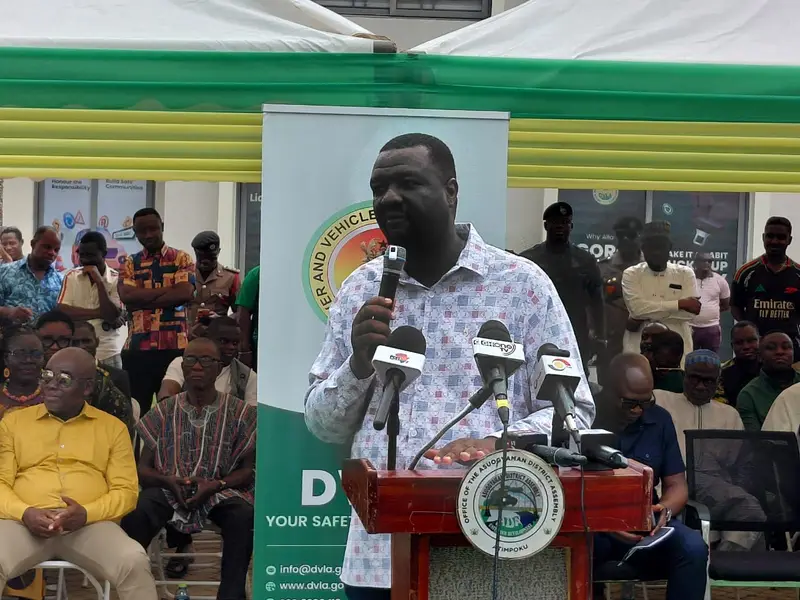

The Driver and Vehicle Licensing Authority (DVLA) has seized about 200 cloned vehicles within six weeks after introducing technology that allows the Authority to verify vehicle identification and chassis numbers directly with manufacturers.
DVLA Chief Executive Julius Neequaye Kotey said the technology has helped identify vehicles whose Vehicle Identification Numbers (VINs) were fraudulently copied from legitimately imported vehicles.
According to him, the development forms part of efforts to strengthen vehicle registration and protect the integrity of Ghana’s national vehicle register.
DVLA technology detects cloned vehicle identification numbers
Mr Neequaye Kotey explained that vehicle cloning syndicates obtain genuine customs documents and use the chassis numbers of legitimate vehicles to register other vehicles that may have entered Ghana through unauthorised channels or without the required duties being paid.
He said this practice can create difficulties for legitimate vehicle owners when they later attempt to register their vehicles.
“We’ve seized about 200 cars,” he said, explaining that some operators obtain correct customs documentation for a particular vehicle and then use the same identification details on another vehicle brought into the country through unofficial channels.
He said the newly deployed technology provides the DVLA with the accurate chassis number supplied by the original manufacturer, allowing officials to identify vehicles carrying cloned identification details.
The CEO said authorities had arrested or seized close to 200 vehicles within about one month of deploying the detection measures, with the overall period reported at approximately six weeks.
Clone detection machines strengthen vehicle checks.
The DVLA has introduced vehicle clone detection machines, including OBD-II scanners, as part of efforts to improve the verification process.
The equipment is designed to help officials authenticate Vehicle Identification Numbers, identify fraudulent registrations and strengthen vehicle security.
The technology is particularly aimed at detecting vehicles that enter Ghana through unapproved channels and subsequently use the VINs of legitimate vehicles that are awaiting registration.
According to the DVLA, vehicle cloning has in some cases resulted in genuine owners being wrongly flagged because their legitimate vehicle identification numbers had already been used to register another vehicle.
DVLA plans biometric international driving licences
Beyond vehicle cloning detection, the DVLA is preparing to introduce biometric international driving licences that can be verified internationally.
Mr Neequaye Kotey said the Authority is also upgrading its vehicle registration and driver licensing systems to improve efficiency and reduce delays for customers.
The DVLA plans to decentralise the printing of driving licences, allowing individual DVLA offices to eventually print licences locally rather than depending entirely on a centralised printing arrangement.
Cashless payments to be expanded
The Authority is also expanding its cashless payment system as part of efforts to reduce cash transactions, improve transparency and make DVLA services more efficient.
The changes form part of a broader digitalisation and decentralisation programme aimed at improving how vehicle and driver-related services are delivered to the public.
DVLA opens first office in Asuogyaman District
Mr Neequaye Kotey made the disclosures when the DVLA, in partnership with the Member of Parliament for Asuogyaman and Deputy Minister of Finance, Thomas Nyarko Ampem, commissioned the first DVLA office in the Asuogyaman District of the Eastern Region.
The new facility is intended to bring vehicle registration, driver licensing and other DVLA services closer to residents in the district.
The Asuogyaman office is the 25th of 40 new district DVLA offices being established across Ghana.
The Authority is targeting the completion of all 40 district offices by the end of 2026.
The expansion is expected to reduce the distance residents have to travel to access DVLA services while strengthening the Authority’s ability to monitor and regulate vehicles and drivers across the country.